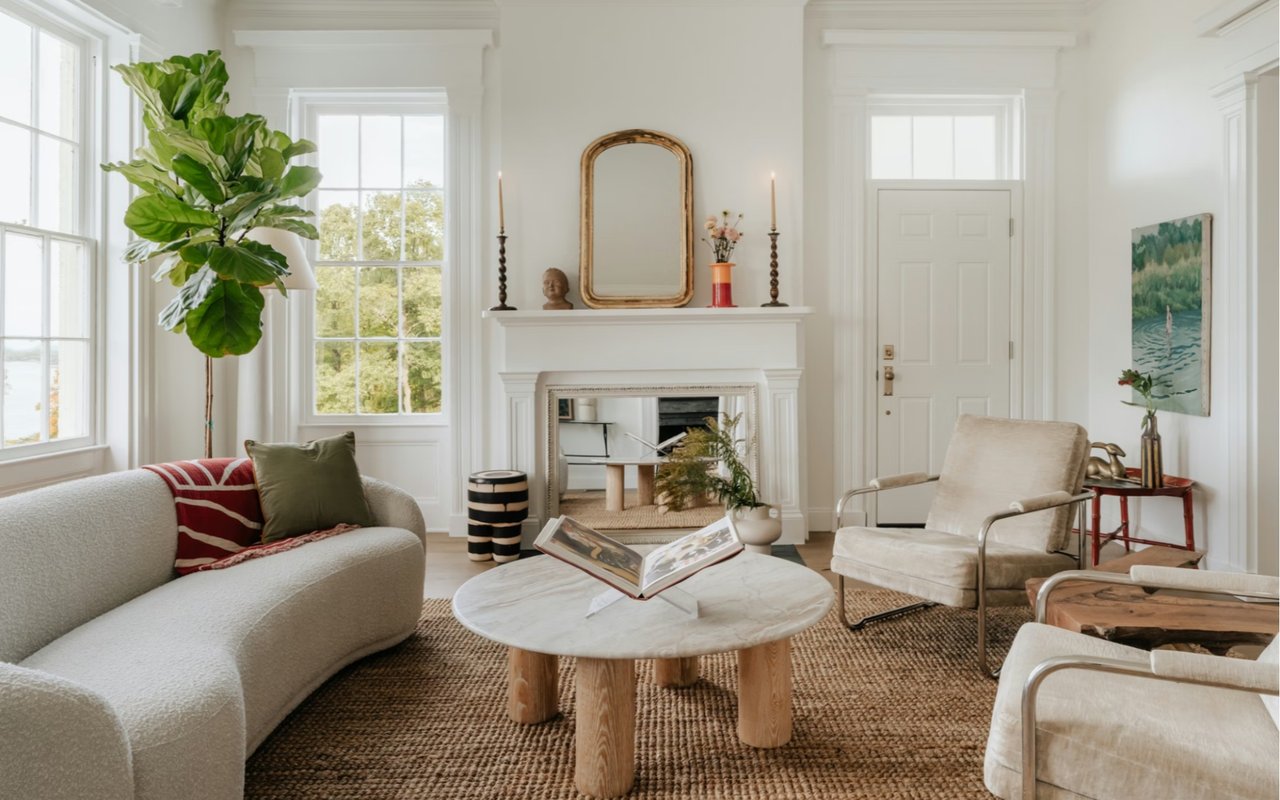
Today’s most discerning buyers are shifting the definition of elegance toward quiet refinement. In Washington, DC, where historic architecture and modern living overlap block by block, the highest-end homes rely on proportion, craft, and material integrity rather than display. Quiet refinement values details that read as inevitable (bespoke millwork, disciplined lighting, and finishes chosen to age well) because they signal permanence without performance.
What draws attention is rarely a single feature; it is the coherence of a home that feels resolved.
Architecture That Doesn’t Announce Itself
In Washington, refinement has always been measured, not displayed. The city’s most enduring residences do not rely on spectacle or excess. They communicate through proportion, material integrity, and restraint. Elegance here is rarely immediate. It reveals itself gradually, through details that feel inevitable rather than designed for attention.
This sensibility is not a trend. It is a throughline.
This sensibility is not a trend. It is a throughline.
Craft as Foundation
The most compelling homes in Washington are distinguished first by craft. Refined millwork, properly scaled trim, and custom moldings belong to the architecture rather than decorating it. Crown profiles, chair rails, and wainscoting add depth without theatricality, and they appear where they should: in living rooms, halls, and stair runs that shape daily movement. These elements are rarely noticed individually, yet their absence is immediately felt, because quality at this level reads as permanence.
Quiet refinement begins where craftsmanship becomes structural.
Quiet refinement begins where craftsmanship becomes structural.
Proportion Over Grandeur
Ceiling height matters, but proportion matters more. In both historic and contemporary residences, disciplined ceiling treatments establish rhythm without dominance. Coffers, subtle reveals, and tray ceilings can add dimension while remaining quiet, and exposed beams can feel architectural when they read as integral rather than decorative. The effect is not a performance of volume. It is a controlled sense of scale that gives rooms authority.
The result is composure rather than drama.
The result is composure rather than drama.
Materials That Age With Intention
Homes defined by quiet refinement privilege materials that improve over time. Wide-plank wood, honed stone, and natural surfaces are selected not for novelty, but for their ability to wear gracefully. In Washington’s layered architectural context, where row homes and historic residences often absorb modern interventions, timeless flooring can be the bridge between eras: European oak, limestone, or marble that supports continuity underfoot.
These choices allow old and new to coexist without friction. The result is continuity rather than contrast.
These choices allow old and new to coexist without friction. The result is continuity rather than contrast.
Custom Cabinetry as Quiet Architecture
In refined homes, storage is never an afterthought. Custom cabinetry and built-ins signal intention because they solve function with the same rigor used to shape the architecture. Floor-to-ceiling bookcases, concealed kitchen panels, and tailored dressing areas communicate restraint through order, and they make rooms feel resolved because every surface has a purpose. When done well, cabinetry disappears into the home’s language while elevating daily living.
Function becomes a form of elegance when it is designed to belong.
Function becomes a form of elegance when it is designed to belong.
Architecture That Resolves, Not Competes
Transitions matter. Arched openings, softened thresholds, and deliberate sightlines guide movement without interruption. These gestures recall European precedent, yet their value is local: they help Washington’s historic proportions accept contemporary flow without breaking character. When curves replace abrupt lines, the home feels calmer, and the architecture reads as one continuous idea rather than a series of edits.
Refinement is often the absence of tension.
Refinement is often the absence of tension.
Vertical Circulation as Structure
Staircases in Washington’s most resolved homes function as anchors rather than announcements. Whether a traditional run with custom ironwork or a contemporary stair with floating treads and honest wood detailing, the best examples sit naturally within the plan. Their success comes from proportion, material clarity, and the way they guide the eye without demanding it. Even sculptural appeal can remain quiet when it belongs to the architecture.
A staircase should organize the home, not perform for it.
A staircase should organize the home, not perform for it.
Technology Without Visibility
In refined homes, technology recedes. Systems are integrated quietly, controls are discreet, speakers sit flush, and appliances are concealed when possible. Especially within historic contexts, innovation is expected to coexist without visual disruption, so lighting, audio, and smart features feel supportive rather than showcased. The most sophisticated upgrades are the ones that preserve the architecture’s calm.
Modernity here is supportive, never declarative.
Modernity here is supportive, never declarative.
Light as Composition
Windows in these residences are less about scale than placement. Framing is considered. Light is shaped rather than maximized. Whether through divided panes, transoms, arched openings, or French doors aligned with sightlines, daylight is treated as an architectural material that edits a room’s mood. In Washington, from Federal-era forms to contemporary builds, the best window design frames views with discipline and keeps the interior legible.
The objective is balance, not brightness.
The objective is balance, not brightness.
Interior Elements With Weight
Doors, hardware, and built-ins are often the clearest signals of quality because they are encountered every day. Solid-core doors, properly scaled heights, and tactile hardware communicate permanence in a way no finish ever could. These details carry a physical clarity: the heft of a door, the certainty of a latch, the precision of a hinge line. The home feels composed because the smallest interactions feel intentional.
Luxury, at this level, is physical.
Luxury, at this level, is physical.
Fireplaces and Baths as Quiet Anchors
A refined home still benefits from focal points, though the best ones hold the room rather than compete with it. Minimalist fireplaces in stone, plaster, or concrete can anchor a living space with warmth and calm geometry, and they work across Washington’s architectural styles when the lines remain disciplined. Bathrooms follow the same logic: stone surfaces, neutral palettes, integrated lighting, and spa-level comfort like wet-room layouts or underfloor heating create a sanctuary without spectacle. These spaces feel indulgent because every choice supports ease.
When restraint guides the details, comfort becomes unmistakably elevated.
When restraint guides the details, comfort becomes unmistakably elevated.
A Unified Architectural Language
Ultimately, quiet refinement depends on coherence. The most enduring homes in Washington do not assemble features; they resolve ideas. Georgian, transitional, and contemporary residences succeed when every decision participates in a single architectural logic—materials, proportions, openings, hardware, and built-ins all speaking the same language. Cohesion is what transforms quality details into a complete experience, and it is what discerning eyes recognize even when nothing appears overtly “designed.”
Nothing competes. Nothing distracts. Everything belongs.
Nothing competes. Nothing distracts. Everything belongs.
Elegance That Holds
In Washington, the most valuable homes are rarely the loudest. They are the ones that remain legible across decades, accommodating modern life without compromising their architectural integrity. Quiet refinement is not about restraint for its own sake. It is about confidence, clarity, and authorship. A home that understands this does not seek attention. It simply retains relevance.
Elegance, here, endures because it never needed to persuade.
Elegance, here, endures because it never needed to persuade.
Representing Homes That Embody Quiet Refinement
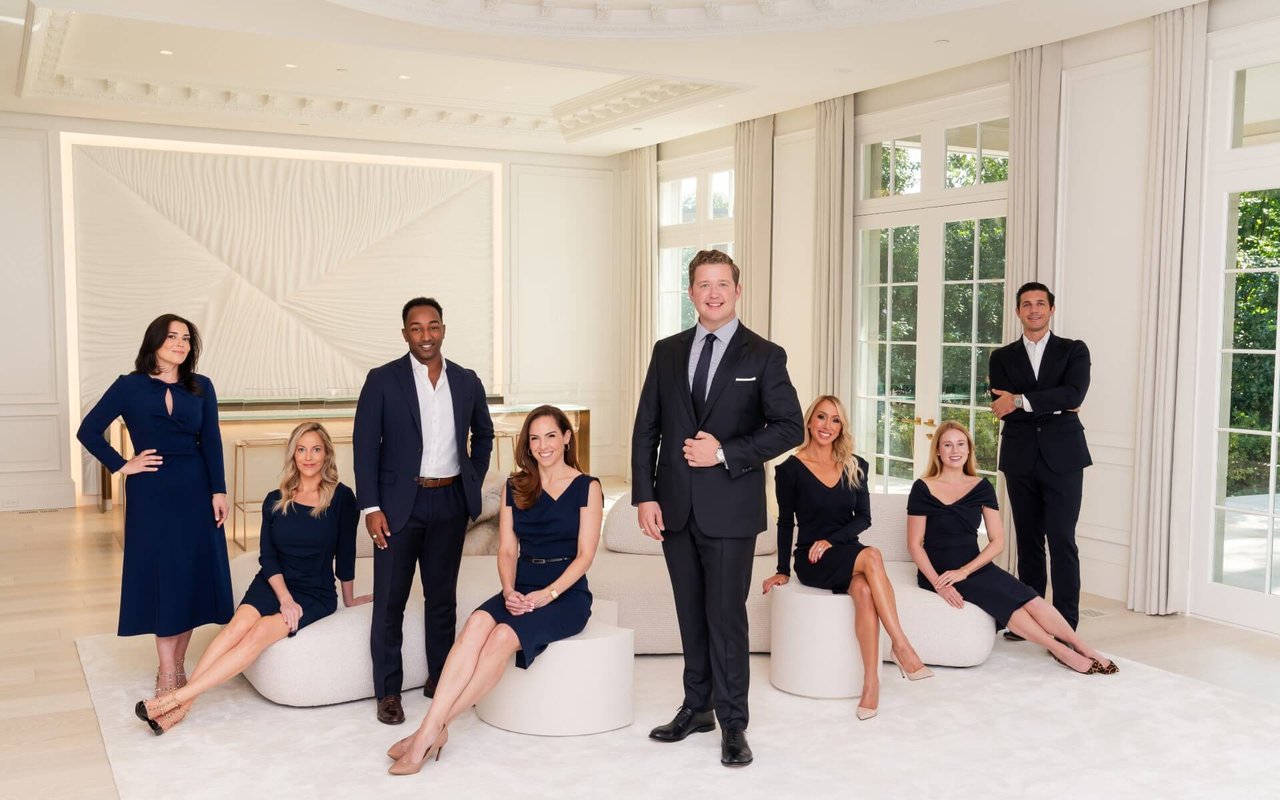
HEIDER represents the most refined properties in the nation’s capital, bringing elevated insight to buyers and sellers who value craftsmanship, architectural integrity, and quiet refinement. Their team understands the nuances of premium design and expertly navigates the architectural styles in Washington, DC, that discerning buyers seek.
Explore their curated portfolio of distinctive properties with a team that defines excellence in high-end real estate.