By Daniel Heider
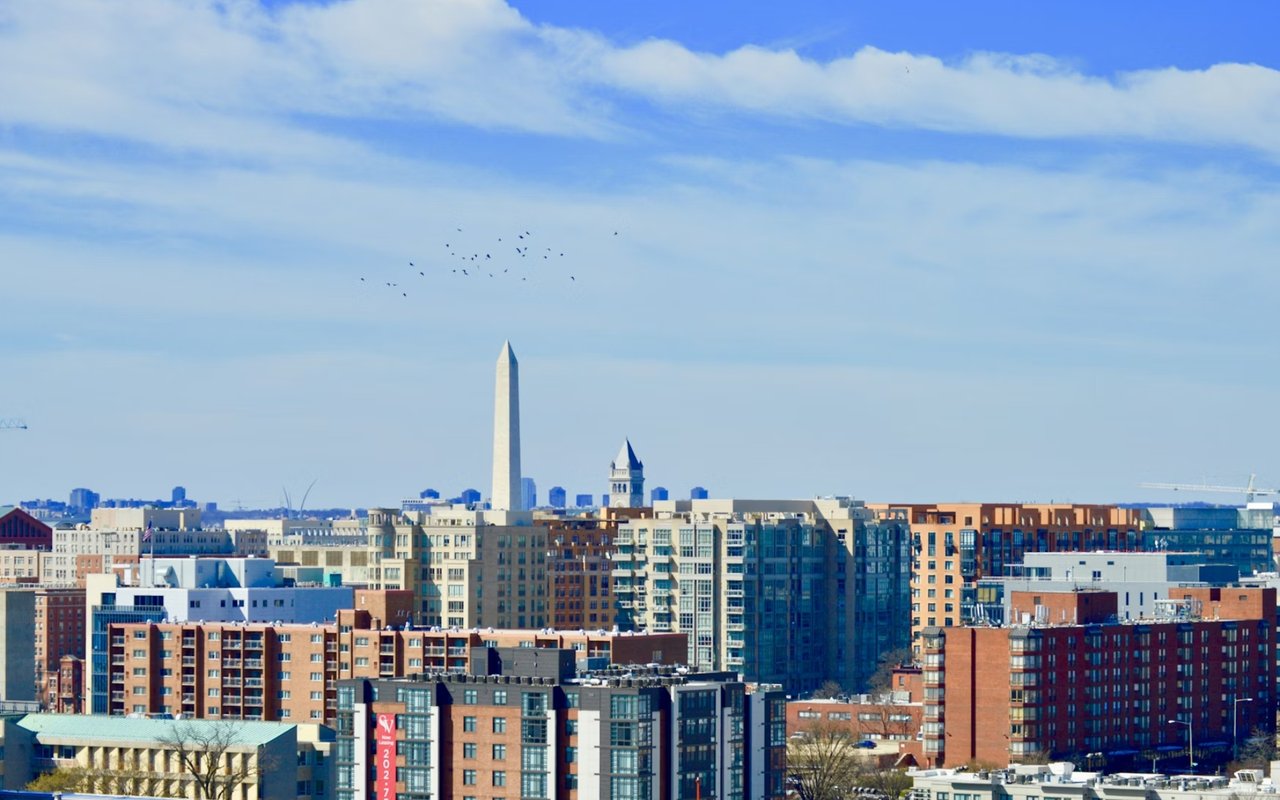
In Washington, DC, view corridors derive from a unique combination: protected federal parkland, low-rise height limits, and long-established sightlines toward the National Mall and the Potomac River. Protected views (in Washington terms) are not absolutes but conditional outcomes of regulation, geography, and what’s between a property and the horizon.
Below is a practical guide to where those “protected feeling” views tend to live, and what to look for when evaluating a property’s sightline quality.
Key Takeaways
- Protected views as a DC asset class
- How to buy for protected views
- Riverfront angles
- Parkland buffers
- Condo view strategy
What “Protected Views” Really Mean in Washington, DC
Homes with views in Washington DC form an asset class. They often share one common trait: the view faces a fixed open space like the Mall, Rock Creek Park, or a river edge with public right-of-way.
Why certain DC vistas hold up over time
- Height limits in the District: With few exceptions, private construction in the city is capped at about 90 feet on residential streets and 130 feet on commercial streets.
- Federal parkland buffers: National Mall and park holdings create open corridors that resist visual crowding.
- Topography advantage: Ridge and bluff sites maintain horizon lines above nearby rooflines.
- Waterfront right-of-way: River paths and park edges keep long stretches visually open.
The most dependable views rely on constraints that do not move easily, like federal land, parks, and established street grids. In that sense, the city and its residential real estate have proven remarkably stable over time.
Buying for Protected Views
A view purchase in Washington is less about finding the most dramatic panorama and more about minimizing future obstruction and functional disappointment.
Three filters to apply:
- Read the Foreground Like a Title Report. What sits between the home and the view is the asset. Federal parkland, parkways, and established waterfront parks behave differently from privately held parcels. Georgetown Waterfront Park’s permanence, for example, is part of why its adjacent views feel less speculative.
- Understand Which Side of the Height Regime You’re On. Within DC, height limits tend to stabilize the skyline. Across the river, you may gain altitude and lose some predictability. Neither is “better.” They are different risk profiles.
- Treat “Corner + Orientation” as Infrastructure. In waterfront and monument-facing neighborhoods, small shifts in angle change everything. A partial view framed through two buildings can disappear with one renovation. A long diagonal across water tends to hold longer because water is not buildable.
Washington’s best views are often quiet at midday and decisive at dusk. The right purchase is the one that integrates into daily life (morning light, evening use, privacy) without requiring constant performance from the home.
Where to Find the Best Views
If you are buying specifically for long-horizon vistas in Greater Washington, you typically end up in these situations.
Waterfront and River-Edge Views Inside DC
- Southwest Waterfront / The Wharf (Washington Channel) — Channel-facing condos and terraces can hold open horizon lines across water toward the monumental core.
- Georgetown Waterfront (Key Bridge to 31st St NW) — Potomac-facing outlooks near Georgetown Waterfront Park benefit from public-land buffering and Georgetown’s low-rise historic fabric.
- Foggy Bottom / Kennedy Center Area (Washington Circle to river edge) — Higher floors with the right orientation can frame layered scenes: Potomac glimpses, bridge lines, and Kennedy Center presence as a landmark anchor.
Monument and Civic-Corridor Sightlines in the Core
- Penn Quarter / East End (downtown blocks near the Mall) — Strongest opportunities are upper-floor exposures that face open space or sit on long visual corridors (especially along major avenues).
- National Mall Edge (Constitution Ave / Independence Ave adjacency) — When residential inventory aligns with Mall-facing open space, views tend to read as clearer and more structurally defended.
- Capitol Hill / Hill East (dome corridors and roof decks) — Views often show up as end-of-block Capitol dome alignments and roof-deck sightlines supported by consistent rowhome scale.
Cross-River “Postcard” Perspectives
- Rosslyn (monument panorama across the Potomac) — One of the region’s most legible skyline perspectives, often capturing the National Mall/Washington Monument alignment.
- Arlington Ridge (elevation-driven long views) — Views are often protected by topography rather than tower height, producing a quieter stability profile.
- Old Town Alexandria (Potomac frontage with occasional monument reach) — Riverfront living with select roof-deck or higher-elevation opportunities that can catch DC landmarks in the distance.
When evaluating a “protected view” in Washington, you’ll want to consider the foreground; the property’s orientation and angle; any terraces or balconies; and, of course, the house’s residential neighborhood. Instead of chasing the loudest view, I often advise clients to find a property they love with beautiful scenery framing daily life.
FAQs
What does “protected view” actually mean in Washington, DC?
It usually means the sightline is reinforced by something that changes slowly — federal parkland, a river edge with public right-of-way, or the District’s low-rise height regime.
How can I evaluate whether a view will hold up over time?
Read the foreground like a title report: water, parkland, and parkways tend to preserve openness better than privately held parcels.
Where in the city are the most reliable areas to look for long-horizon vistas?
Inside DC, start with Southwest Waterfront/The Wharf, Georgetown Waterfront, and the Foggy Bottom/Kennedy Center zone, plus Mall-edge and Capitol Hill corridor views downtown.
Contact Daniel Heider Today
DC’s view market is unusually specific because federal parkland, river edges, and sightline corridors shape what feels permanent. The best view homes often trade hands quickly and require careful verification, and I’ll guide that process with a local eye so the home’s sightlines and daily routine align from day one.
Connect with me, Daniel Heider, as the next key step toward owning a home with a view in DC.
Connect with me, Daniel Heider, as the next key step toward owning a home with a view in DC.