
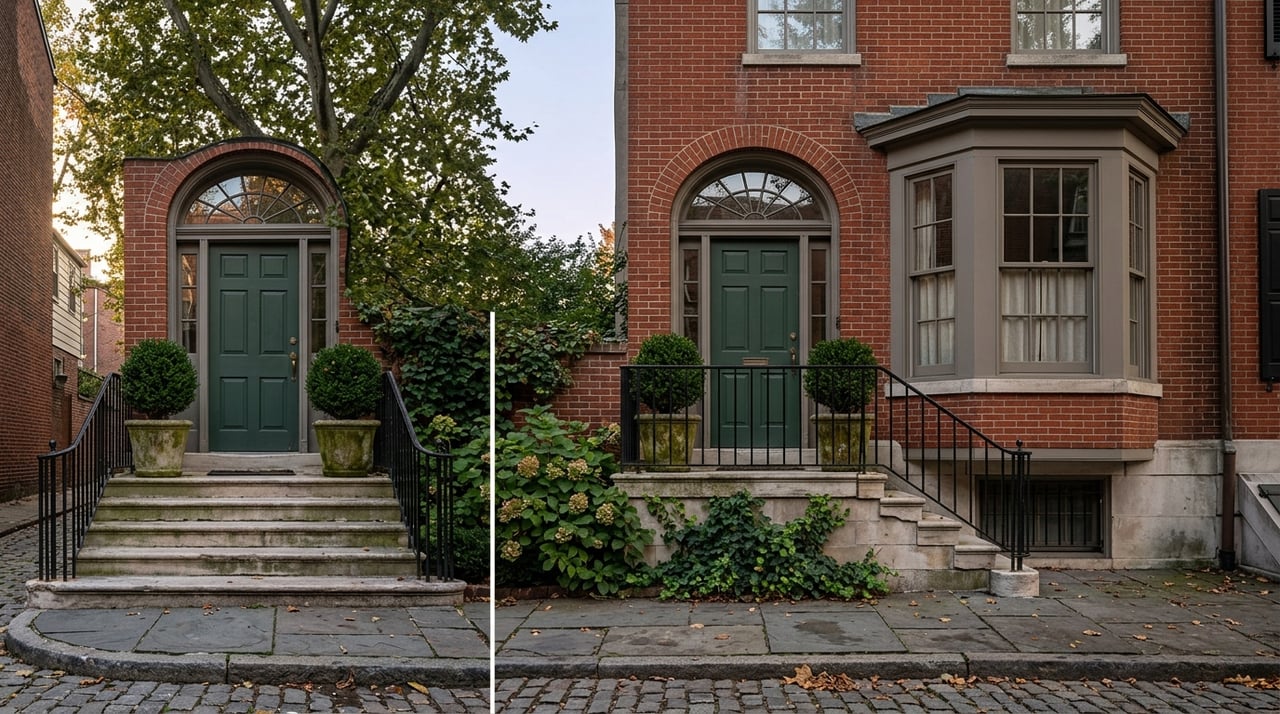
If you want a Washington neighborhood that feels both storied and current, Georgetown stands apart. You get historic streets, refined architecture, lively shopping and dining, and direct access to the Potomac, all within one of DC’s most recognizable settings. For buyers considering a move or sellers thinking about how Georgetown is perceived in today’s market, it helps to understand what truly shapes daily life here. Let’s take a closer look.
Georgetown’s Historic Identity
Georgetown’s sense of place starts with its history. Established in 1751 as a tobacco port town, it predates the City of Washington by 40 years and became part of the District in 1871, according to the Georgetown BID FAQ. That long history still shows up in the neighborhood’s streetscape, from older rowhouses to institutional and commercial buildings that reflect centuries of growth.
The neighborhood is also defined by preservation. The Old Georgetown Act of 1950 created review standards for construction, alteration, reconstruction, and razing within the historic district, which helps explain why Georgetown feels so visually cohesive. For you as a buyer or homeowner, that often means a neighborhood character that has been carefully protected over time.
At the same time, Georgetown is not simply a preserved colonial backdrop. A National Register amendment found that 88 percent of the present building stock was constructed after 1870. In practical terms, that means the neighborhood offers a layered architectural mix rather than a single-period look.
Architecture Feels Layered, Not Frozen
One of Georgetown’s great strengths is variety within consistency. DC preservation guidance notes that the historic district includes small residences, large estates, and commercial, institutional, and industrial buildings in stone, brick, and wood, with some of the city’s oldest structures dating to the mid-18th century. That blend creates visual richness without losing the neighborhood’s unified feel.
For design-conscious buyers, this matters. Georgetown can appeal to someone who loves historic detail, but it also speaks to those who appreciate how older architecture interacts with later Victorian and early-20th-century forms. It is a neighborhood where scale, materials, and streetscape tend to matter as much as square footage.
A well-known example is the Old Stone House, built in 1765 and recognized by the National Park Service as the oldest structure on its original foundation in Washington, DC. Landmarks like this reinforce Georgetown’s deep roots while giving the neighborhood a sense of authenticity that is difficult to replicate.
Shopping And Dining Shape Daily Life
Georgetown is not only historic. It is also one of DC’s most active retail and dining destinations. The Georgetown BID describes the area as a National Historic District with more than 470 shops, restaurants, and institutions, with M Street and Wisconsin Avenue at the center of the business district.
That concentration changes how the neighborhood lives day to day. You can move from a quiet residential block to a polished retail corridor in minutes, which is part of Georgetown’s appeal for buyers who want both beauty and energy. It is one of the reasons the neighborhood feels highly livable, not just admired from a distance.
M Street And Wisconsin Avenue
The neighborhood’s main commercial corridors are busy, established, and highly visible. Georgetown BID describes M Street as one of the best shopping streets in the country, and the current FAQ notes that the neighborhood has more than 150 clothing and fashion stores and over 100 restaurants representing more than 50 ethnicities. That mix gives Georgetown a broad lifestyle offering without losing its sense of identity.
For homeowners, that means convenience with a luxury edge. Whether your priority is dining out, browsing boutiques, or finding polished home goods, Georgetown offers unusual density in a walkable setting. The retail experience also supports the neighborhood’s reputation as one of Washington’s most consistently in-demand locations.
Book Hill And Cady’s Alley
Beyond the main corridors, Georgetown has more specialized pockets that deepen its character. Book Hill is known for antique stores, art galleries, independent boutiques, and bakeries, giving upper Wisconsin Avenue a more intimate rhythm. It offers a different feel from M Street while staying true to the neighborhood’s design-aware identity.
Cady’s Alley adds another layer. As the anchor of the Georgetown Design District, it includes more than 20 home-furnishings showrooms and high-end fashion retailers in historic industrial buildings. That detail is important because it shows Georgetown is not only about charm. It also has a distinctly curated, design-forward side.
Georgetown Stays Active Year-Round
Georgetown continues to evolve, which helps it avoid feeling overly nostalgic. The BID’s 2024 retail review reported 47 new businesses, 15 new restaurant openings, and 700 added outdoor-dining seats. That kind of activity supports a neighborhood image that is established, but still moving.
Seasonal events also add to the atmosphere. According to the Georgetown BID FAQ, signature events such as Georgetown French Market and Georgetown GLOW help keep the neighborhood lively beyond standard shopping hours. For buyers evaluating lifestyle fit, those details often matter just as much as architecture.
Waterfront Access Sets Georgetown Apart
What truly distinguishes Georgetown from many other historic urban neighborhoods is its relationship to the water. The Potomac is not a distant backdrop here. It is part of the neighborhood’s daily routine, visual identity, and recreational appeal.
The Georgetown waterfront guide says the district is less than a 5-minute walk south of M Street and offers hiking, biking, running, paddling, and waterfront dining. That level of proximity gives Georgetown an unusually balanced lifestyle for an urban setting.
Georgetown Waterfront Park
Georgetown Waterfront Park stretches along the Potomac from 31st Street NW to the Key Bridge and was completed in fall 2011. The National Park Service notes that it links 225 miles of parkland along the river and includes car-free pathways, a seasonal fountain, rain gardens, and a labyrinth.
For residents, this creates a valuable rhythm. You can live in one of Washington’s most historic and polished neighborhoods while still having easy access to open sky, river views, and walking paths. That combination is a major part of Georgetown’s long-term appeal.
C&O Canal And Outdoor Recreation
The C&O Canal towpath adds another outdoor dimension. The canal runs 184.5 miles to Cumberland, Maryland, and its first mile passes through Georgetown. Georgetown BID describes this corridor as a serene urban oasis used for running, cycling, picnicking, and occasional wildlife watching.
If you value movement and outdoor access, Georgetown offers more than scenic views. The waterfront guide also highlights kayak, canoe, and paddleboard rentals and lessons through Key Bridge Boathouse and Thompson’s Boat Center, plus nearly 50 public bike racks, eight Capital Bikeshare stations, and a bike-fixit station in the neighborhood. That infrastructure supports a lifestyle built around walking, biking, and being outside.
Washington Harbour Adds Social Energy
The waterfront is also a social destination. Washington Harbour brings together dining terraces, river cruises, water taxis, and the district’s largest outdoor ice-skating rink in winter. It gives Georgetown a more animated, evening-oriented layer that complements the quieter residential streets uphill.
This is one reason Georgetown feels multidimensional. You can have peaceful residential blocks, historic architecture, luxury retail, and a waterfront scene all within one neighborhood. Few DC areas combine those elements as naturally.
Getting Around Georgetown
Georgetown’s location in Northwest DC is central, but its transportation pattern is distinct. The neighborhood sits with the Potomac River to the south, Rock Creek to the east, and Georgetown University on the west end, while Key Bridge connects it to Rosslyn, Virginia. That position helps Georgetown function as both a residential enclave and a regional destination.
One practical point is that Georgetown does not have its own Metro station. The BID notes that Foggy Bottom-GWU is about a 15-minute walk away, and Rosslyn is a short walk across Key Bridge. For many residents, that means daily life tends to revolve around walking, biking, nearby transit access, and short car trips rather than stepping directly onto Metro within the neighborhood.
Parking availability also matters here. Georgetown BID says there are 20 parking lots and garages with more than 3,800 spaces, which helps support both residential convenience and visitor traffic. If you are considering Georgetown, it is helpful to think of mobility here as flexible and multimodal rather than rail-centered.
Why Georgetown Continues To Draw Buyers
Georgetown’s appeal comes from overlap. It offers historic preservation, luxury retail, design awareness, waterfront recreation, and a strong sense of neighborhood identity all at once. That combination is hard to reproduce, even within Northwest DC.
For buyers, the neighborhood can satisfy several priorities at the same time. You may be looking for architecture with provenance, walkable access to dining and shopping, or a setting that feels both established and active. Georgetown works because it connects those lifestyle goals rather than forcing you to choose only one.
For sellers, that same mix supports a compelling story. A Georgetown home is rarely just about the residence itself. It is also about the streetscape, the waterfront, the neighborhood’s visual continuity, and the everyday ease of living somewhere that feels both polished and deeply rooted.
If you are considering a purchase or preparing to position a home in Georgetown, local perspective matters. With a design-led eye and deep knowledge of Washington’s luxury neighborhoods, Daniel Heider - Main Site offers thoughtful guidance for buyers and sellers who want a more informed approach.
FAQs
What is Georgetown, DC known for?
- Georgetown is known for its historic district status, layered architecture, luxury shopping and dining, and direct access to the Potomac waterfront, including Georgetown Waterfront Park and the C&O Canal.
Does Georgetown, DC have waterfront access?
- Yes. Georgetown has direct access to the Potomac River through Georgetown Waterfront Park and Washington Harbour, with opportunities for walking, biking, dining, boating, and seasonal activities.
Is Georgetown, DC a historic neighborhood?
- Yes. Georgetown was established in 1751 and is a protected historic district shaped by preservation rules under the Old Georgetown Act.
Does Georgetown have a Metro station?
- No. Georgetown does not have its own Metro station, but Foggy Bottom-GWU is about a 15-minute walk away and Rosslyn is accessible across Key Bridge.
What is daily life like in Georgetown, DC?
- Daily life in Georgetown often blends walkable shopping and dining, historic residential streets, and easy access to trails, the waterfront, and nearby transit connections.