
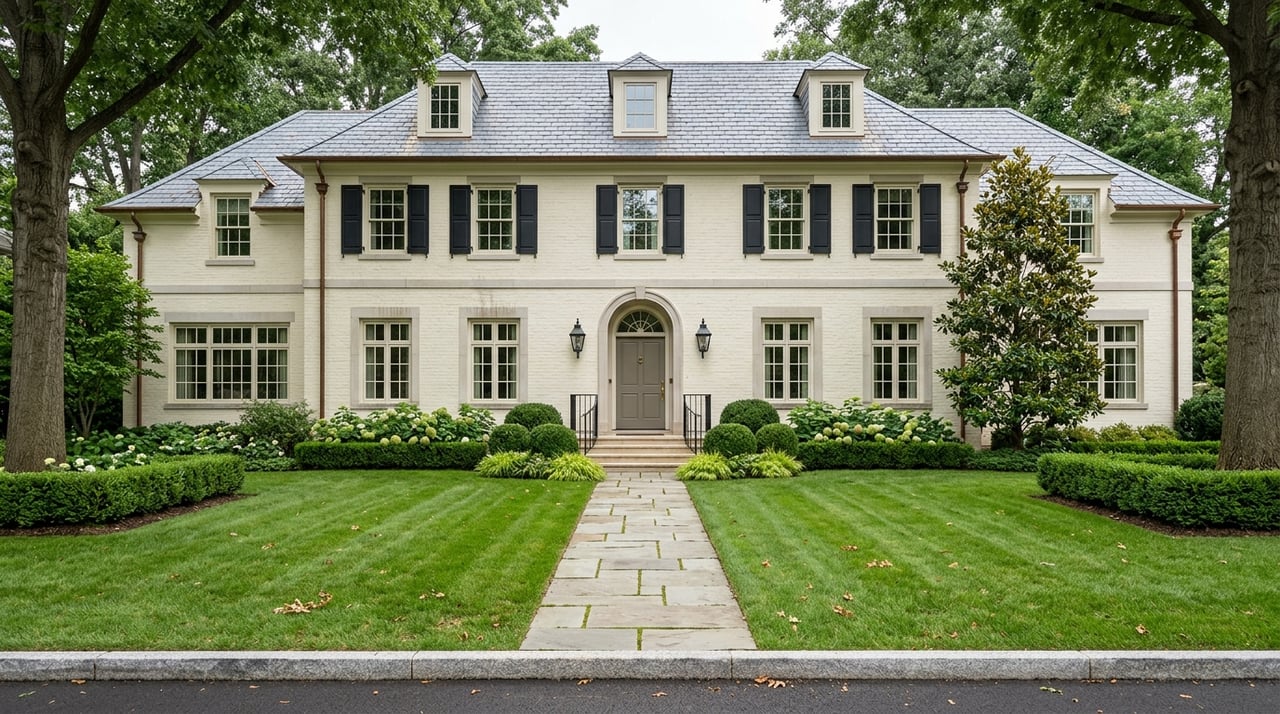
If you are drawn to Washington real estate that feels prestigious without trying too hard, Kalorama stands apart. This is a neighborhood where luxury is expressed through architecture, privacy, and setting rather than spectacle. If you are considering buying or selling here, understanding what makes Kalorama different can help you make a smarter move. Let’s dive in.
Why Kalorama Feels Different
Kalorama’s identity is shaped by two historic areas: Sheridan-Kalorama and Kalorama Triangle. According to the DC Office of Planning’s Sheridan-Kalorama Historic District materials, Sheridan-Kalorama was designated in 1989, while Kalorama Triangle was designated in 1987.
That history matters because it helps explain the neighborhood’s atmosphere today. Kalorama is known for its quiet residential character, planted sites, and historic streetscapes that create a sense of retreat in the middle of Northwest DC.
In Sheridan-Kalorama especially, many buildings still read as residential even when they now serve as embassies, cultural centers, or other institutional uses. As noted in the historic district nomination, that contributes to the area’s discreet and elegant feel.
Architecture Defines Kalorama Luxury
Kalorama luxury real estate is not limited to one property type. The neighborhood includes mansion-scale residences, urban villas, townhouses, rowhouses, apartment buildings, and luxury condos, which gives buyers a wider range of options than many people expect.
The architectural pedigree is a major part of the appeal. In Sheridan-Kalorama, the historic nomination highlights some of Washington’s most significant mansion-scale houses, with styles including Beaux Arts Classicism, Italian Classicism, English Georgian, and Colonial Revival.
That design depth is one reason the neighborhood continues to attract discerning buyers. For someone who values proportion, craftsmanship, and a sense of permanence, Kalorama offers a strong architectural case for long-term value.
More Than Mansions
It is easy to think of Kalorama as a detached-home market only, but the neighborhood’s history tells a broader story. The Sheridan-Kalorama nomination notes that by 1910, the area had about 224 single-family dwellings and roughly 438 apartment units, with several apartment buildings described as among the city’s largest and most expensive at the time.
That mix still informs how the neighborhood functions today. You can find grand houses with substantial presence, but you can also find sophisticated apartment and condominium living in a setting with strong historic character.
Kalorama Triangle’s Distinct Character
Kalorama Triangle brings another layer to the neighborhood’s identity. The Kalorama Triangle historic district nomination describes an almost exclusively residential district with curving streets, large apartment buildings, attached houses, and some detached homes.
Its architectural classifications include Late 19th and 20th Century Revivals, Arts and Crafts, Colonial Revival, and Mission or Spanish Colonial Revival. For buyers, that means visual variety and a distinctly urban luxury environment with historic depth.
What Drives Kalorama Demand
At the high end, Kalorama’s value comes from a rare combination of scarcity, privacy, and location. The neighborhood’s free-standing houses occupy more than half of the land area in Sheridan-Kalorama, even though they represent only about one-third of the building stock, according to the historic nomination.
That land pattern helps explain why the area feels so spacious and secluded. In a city setting, that sense of separation is hard to replicate.
Embassies and chanceries also shape how Kalorama is perceived. They reinforce an environment associated with discretion, stature, and architectural presence rather than constant public activity.
A Selective Luxury Market
Current market data suggests luxury demand in the Washington region remains active, though more selective than it was a year ago. The Bright MLS Home Demand Index for Washington, DC showed luxury single-family demand at 76 in April 2026, up from 63 in March, while luxury condo demand reached 110, up from 96 in March.
At the same time, both figures were below year-ago levels, which points to a market where buyers are engaged but careful. For sellers in Kalorama, that means pricing, presentation, and positioning matter even more when marketing a distinctive property.
A Washington Post report cited through Bright MLS data also noted that luxury-home sales dipped 4 percent in the final three months of 2025 compared with the same period a year earlier, and about 35 percent of luxury purchases were all-cash. That is a useful reminder that well-qualified buyers are still active, but they are often highly strategic.
Kalorama Pricing Tells a Layered Story
Kalorama’s luxury market is not one-size-fits-all. Publicly reported transactions and listings cited by Axios and referenced in the research show a range from a $3.315 million townhouse sale to transactions and listings at $6.2 million, $6.4 million, $8.2 million, and $9.4 million.
That spread shows how the neighborhood can serve both upper-luxury and ultra-luxury buyers. It also shows why broad averages only tell part of the story in Kalorama.
For a more localized snapshot, Realtor.com’s February 2026 data for the Sheridan-Kalorama Historic District reported 15 active homes, a median listing price of $1.82 million, a sale-to-list ratio of 97 percent, and median days on market of 62.
Those numbers are helpful, but they do not replace property-level analysis. In a neighborhood where lot size, architectural significance, condition, and privacy vary widely, two homes on nearby streets can perform very differently.
How Kalorama Compares Nearby
Buyers often compare Kalorama with other elite Northwest DC neighborhoods, but the appeal is distinct. If you are deciding where to focus your search, it helps to understand the differences clearly.
Kalorama vs. Georgetown
Compared with Georgetown, Kalorama is generally more inward-facing and residential. The Georgetown Historic District documentation emphasizes a broader mix of residential, commercial, and industrial history, including the waterfront and M Street corridor.
Kalorama offers a different experience. Its value is tied less to retail and visitor activity and more to seclusion, embassy presence, and architect-designed homes.
Kalorama vs. Spring Valley and Wesley Heights
Compared with Spring Valley and Wesley Heights, Kalorama feels more urban, even at the top end of the market. The Ward 3 Heritage Guide describes Wesley Heights as an exclusive, car-oriented neighborhood of large detached homes and Spring Valley as a highly exclusive area with larger lots, wooded yards, and automobile-dependent access.
Kalorama competes on a different set of strengths. Instead of larger suburban-style lots, it offers historic urban form, proximity, and a level of privacy created by architecture, siting, and neighborhood fabric.
What Buyers Should Watch For
If you are considering a purchase in Kalorama, the most important question is not simply whether a home is large or expensive. It is whether the property’s architecture, orientation, and condition support the kind of living experience you want.
A thoughtful search often includes evaluating:
- The property type, such as detached house, townhouse, condo, or apartment-style residence
- The architectural style and integrity of original details
- The relationship between public-facing rooms and private outdoor space
- The level of renovation and whether updates feel lasting or cosmetic
- The specific micro-location within Sheridan-Kalorama or Kalorama Triangle
For design-conscious buyers, nuance matters here. A home’s scale, finishes, and layout can shape value just as much as its address.
What Sellers Should Know
If you are selling in Kalorama, it helps to remember that buyers here are often highly informed. They are not only comparing price per square foot. They are evaluating design, provenance, condition, privacy, and presentation.
That means the strongest listing strategy usually starts with careful positioning. In a market where demand is active but selective, buyers respond best to homes that are priced thoughtfully, prepared beautifully, and presented with a clear point of view.
For architecturally distinctive homes, this is especially important. A tailored strategy can help buyers understand not just what the property is, but why it is compelling within the Kalorama market.
Why Local Guidance Matters
Kalorama is a neighborhood where small differences can have an outsized effect on value. Historic context, street character, building type, and design quality all play a role, and those factors do not always show up fully in broad market averages.
That is why local, design-aware guidance can be so valuable, whether you are buying or selling. A nuanced understanding of architecture, buyer perception, and Northwest DC micro-markets helps you make decisions with more confidence.
If you are exploring Kalorama luxury real estate, Daniel Heider - Main Site offers the kind of polished, market-savvy support that can help you navigate a highly specific neighborhood with clarity and discretion.
FAQs
What makes Kalorama luxury real estate different from other DC neighborhoods?
- Kalorama stands out for its combination of historic architecture, privacy, embassy presence, and a quiet residential feel in a close-in Northwest DC location.
What types of luxury homes are found in Kalorama, DC?
- Kalorama includes mansion-scale detached homes, urban villas, townhouses, rowhouses, apartment buildings, and luxury condominiums.
Is Kalorama only known for large detached houses?
- No. Historic records show the neighborhood has long included both significant detached residences and high-end multi-family buildings.
How does Kalorama compare with Georgetown for luxury buyers?
- Kalorama is generally more secluded and residential in character, while Georgetown has a more mixed-use environment with stronger retail and visitor activity.
What should sellers focus on in the Kalorama luxury market?
- Sellers should focus on pricing, presentation, architectural positioning, and a strategy that highlights what makes the property distinct within a selective luxury market.
Why is Kalorama considered a private luxury neighborhood in Washington, DC?
- Its historic urban form, planted sites, free-standing houses, and embassy presence create privacy through design and neighborhood structure rather than distance alone.