
By Daniel Heider
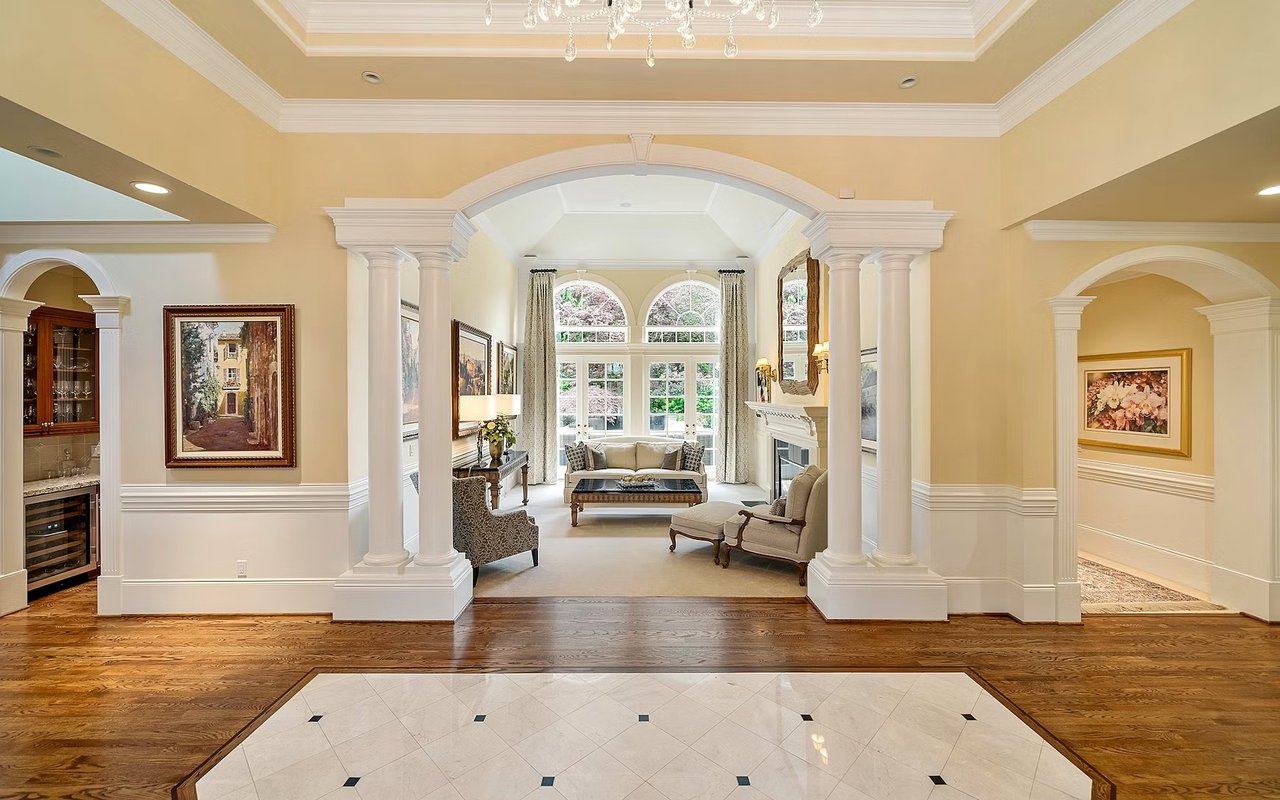
Washington’s grandest homes often come with rooms that were built to carry formality through proportion, ceiling height, and material weight. Such spaces frequently include deep crown moulding, tall windows, substantial fireplaces, and long sightlines that require careful finishing choices to feel complete.
As part of my work, I pay close attention to how texture, fixture scale, and layered illumination work together in DC homes. The following home lighting tips are intended as a guide for resolving the aesthetics of large rooms in the city's luxury homes.
Key Takeaways
- Scale first: Fixture size should match ceiling height.
- Texture matters: Materials shape how light lands.
- Layers count: Ambient, task, and accent light each serve a role.
- Context leads: Georgetown needs a different approach than the Wharf.
Start With the Architecture of the Room
Grand spaces in Washington usually come with strong existing cues, including mantel height, cornice depth, window casing width, and the distance between fireplace, seating, and art walls.
Architectural Cues Worth Measuring
- Ceiling height: This determines chandelier drop, shade size, and the visual weight a fixture can carry.
- Window scale: Tall sash windows bring strong daylight and call for evening lighting that preserves balance.
- Moulding depth: Pronounced trim can support more substantial fixtures and richer wall finishes.
- Fireplace placement: A strong mantel often anchors the room and shapes the central lighting plan.
In Washington homes with formal architecture, proportion usually carries more authority than novelty, which is why the best home lighting tips always begin with scale.
Use Texture to Give Large Rooms More Presence
Texture helps a room hold light across more than one surface, which gives the whole space greater coherence.
Textures That Work Well in Grand Rooms
- Plaster walls: They catch light gently and give broad surfaces a more settled appearance.
- Natural stone: Honed marble and limestone add weight around fireplaces, bars, and entry passages.
- Wool and silk rugs: These soften sound and help define seating areas in long rooms.
- Tailored drapery: Full panels bring needed vertical presence and improve how the room reads at dusk.
You'll find this interplay in many Cleveland Park and Wesley Heights homes, where broader walls and larger footprints can support limewash, plaster, oak, mohair, wool, and stone with a quieter kind of richness.
Layer Light for Daily Use and Evening Entertaining
A single fixture rarely completes a large room, especially in residences used for dinners, small receptions, and longer evenings at home.
Layers I Recommend Most Often
- Ambient light: Use a central fixture or recessed perimeter plan to establish an even base level.
- Accent light: Picture lights, library lamps, and directional fixtures help artwork and shelving read clearly.
- Task light: Floor lamps and table lamps support reading corners, writing desks, and game tables.
- Dimming controls: Smooth dimming lets the room adjust to cocktails, dinner, or a quieter night in.
Many of my favorite home lighting tips come from this kind of layering because it supports both architecture and real life in a way that feels calm and intentional.
Match Fixture Size to Ceiling Height and Room Volume
Scale can make or break a grand room, and that issue shows up quickly in double parlors, large dining rooms, and expanded family rooms across Spring Valley and Georgetown.
Fixture Choices That Usually Read Well
- Large chandeliers with open forms: These carry presence without creating visual heaviness.
- Multi-arm fixtures: They spread light across a broad footprint and suit formal rooms with symmetry.
- Overscale shades on lamps: These help side tables and consoles keep pace with tall ceilings.
- Wall sconces in pairs: These add rhythm along long walls and help bridge vertical scale.
A room with generous volume needs lighting that can hold its place from every vantage point, including the entry and the far corner.
FAQs
How do I know whether a chandelier is the right size for a large room?
I start with ceiling height, table or seating placement, and the width of the room. A fixture should carry enough visual weight to hold the center without compressing the volume around it.
Which materials help a grand room feel warmer in the evening?
I usually recommend plaster, wool, natural stone, and tailored drapery because each one changes the way light lands. Those materials also help larger rooms feel more settled during both daytime and evening hours.
Are recessed lights enough for a formal living room?
I see the best results when recessed lighting supports a broader plan that includes lamps, sconces, and a central decorative fixture. A layered approach usually gives the room a better range and a more comfortable evening atmosphere.
Contact Daniel Heider Today
If you are evaluating a Georgetown townhouse, a Kalorama residence, or a larger home in Spring Valley, I can help you read the room through a Washington lens.
Reach out to me, Daniel Heider, for guidance on all things Washington DC real estate, including how lighting, texture, and scale can strengthen the way a home lives and presents.
Reach out to me, Daniel Heider, for guidance on all things Washington DC real estate, including how lighting, texture, and scale can strengthen the way a home lives and presents.