
By Daniel Heider
Washington’s luxury housing stock follows preservation rules, masonry construction, embassy-era formality, and a culture that rewards discipline over spectacle. When people ask me about luxury home design trends, I usually start with what holds up in this city after the first impression fades.
In Washington, the strongest interiors and renovations feel resolved within the structure of the home and within the logic of the neighborhood.
Key Takeaways
- Enduring value: Proportion and material integrity matter.
- Context counts: Georgetown needs different decisions than the Wharf.
- Quiet systems: Integrated technology supports daily use.
- Design discipline: Lasting homes use restraint.
Materials That Carry Weight Over Time
In Washington, materials read differently because so many luxury properties sit inside historic envelopes or alongside older residential streets where brick, stone, plaster, and millwork already set the tone.
Materials That Tend To Last
- Natural stone: Marble, limestone, and soapstone age well when scale and finish match the architecture.
- White oak flooring: A quieter grain and a stable tone work across Federal, Beaux-Arts, and transitional homes.
- Plaster walls: A subtle surface adds depth and suits older masonry structures especially well.
- Painted millwork: Cabinetry and paneling with tailored profiles usually hold their place longer than ornate treatments.
Pay close attention to whether finishes feel grounded in the architecture, especially in neighborhoods like Georgetown, Massachusetts Avenue Heights, and Cleveland Park, where the house itself already provides a strong framework.
Layout Decisions That Stay Useful
Plan changes have lasting consequences in Washington because rowhouses, detached residences, and luxury condominiums each come with their own structural logic and circulation patterns.
Layout Elements I Watch Closely
- Defined public rooms: Separate dining rooms, libraries, and formal living rooms still matter in many upper-bracket Washington homes.
- Strong kitchen placement: Kitchens that connect clearly to family space and outdoor terraces support daily use and entertaining.
- Thoughtful mudroom or service entry: In larger homes, these spaces help the house work better without disrupting front-facing rooms.
- Well-planned lower levels: A lower level earns its place when it feels integrated into the house and supports guest space, wellness, or media use.
Look at how a home moves from entry to reception rooms to kitchen spaces, since good flow matters as much as any finish package.
Kitchens and Baths That Read as Permanent
Kitchens and baths influence perception quickly, especially in neighborhoods where renovation quality is easy to compare from one listing to another.
What Usually Endures In Wet Spaces
- Inset or well-detailed cabinetry: Clean joinery and disciplined profiles support a more settled look.
- Integrated storage: Appliance garages, concealed refrigeration panels, and built-in linen storage help maintain visual order.
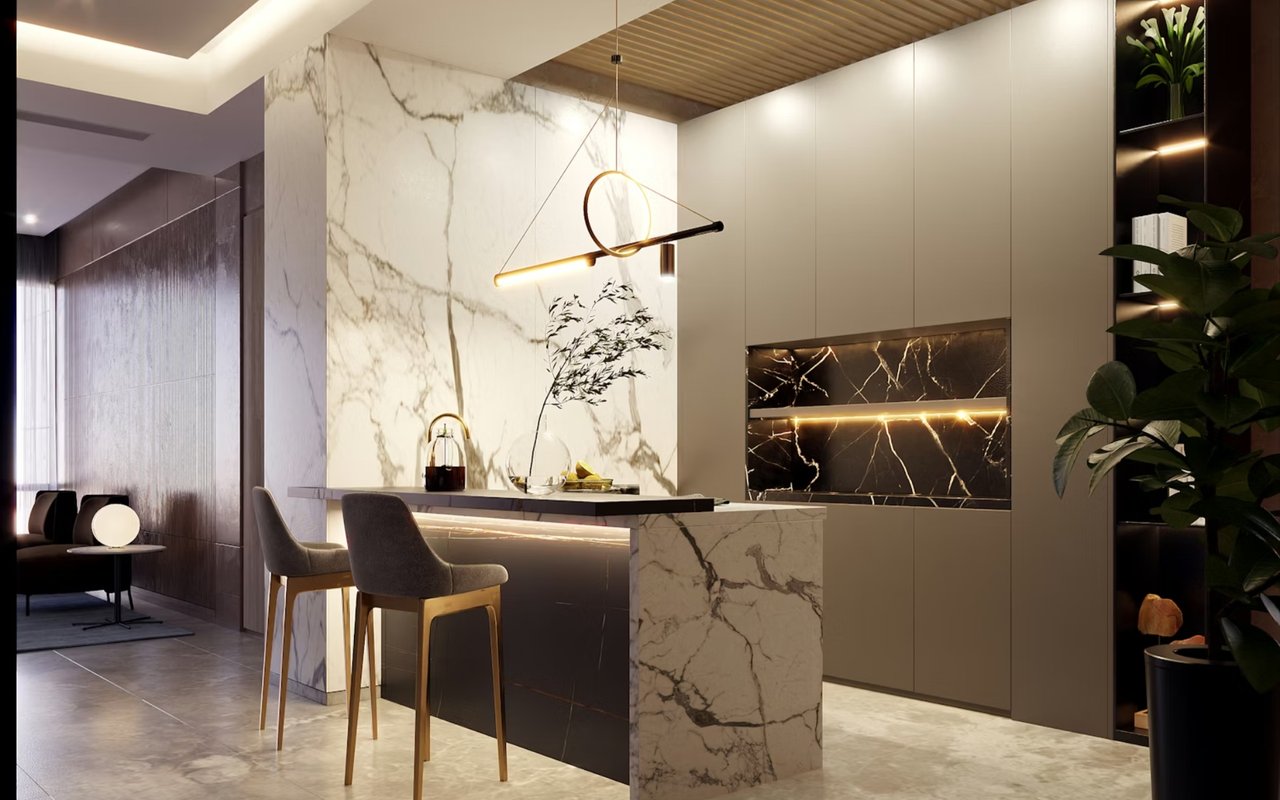
- Calm stone selections: Honed counters and slab surrounds usually age more gracefully than heavily patterned statements.
- Layered lighting: Task, ambient, and decorative lighting used with restraint improves function and atmosphere.
The strongest results are often achieved in places like the West End, Logan Circle, and Kalorama, where refined detailing and consistent execution often matter more than conspicuous specification.
Technology That Disappears Into the Architecture
Smart systems matter in Washington, although their success usually comes from how little attention they call to themselves.
Systems Worth Planning Early
- Automated shades: These help manage light and privacy while preserving clean window lines.
- Quiet climate zoning: Well-designed HVAC zones improve comfort across tall rowhouses and larger detached homes.
- Integrated audio: Flush speakers and concealed controls keep formal rooms visually clear.
- Structured wiring: Strong infrastructure supports future updates and smoother system coordination.
This is especially true in older homes on Capitol Hill and in Dupont Circle, where wiring, lighting controls, and climate systems have to be resolved carefully within masonry walls and preservation-sensitive interiors.
What Feels Ephemeral in the Current Cycle
In Washington, design choices stand out sharply because the city’s residential architecture, from Embassy Row to Spring Valley, is shaped by order, precedent, and proportion.
Choices to View With Caution
- Oversized statement lighting: Fixtures that dominate a room can throw off scale in formal houses with strong architecture.
- Highly sculptural islands: Unusual forms often date quickly and can complicate kitchen function.
- Overly themed spa baths: Heavy feature layering can reduce the calm and permanence these spaces should carry.
- Visible gadgetry: Screens, controls, and illuminated panels can weaken the coherence of carefully designed rooms.
Remember, the top Washington homes gain credibility through restraint, which is why quieter decisions often outlast more attention-seeking ones.
FAQs
Which design features hold value best in Washington luxury homes?
Look first at materials, plan logic, and integrated systems. Stone, millwork, well-planned kitchens, and quiet technology tend to remain relevant across many property types in Washington.
Are open layouts always the best choice for high-end homes here?
That depends on the architecture and the neighborhood. Many Washington homes benefit from a balanced plan that preserves formal rooms while still improving flow and connection.
How do I tell whether a renovation will age well?
I ask whether the decision fits the scale, structure, and character of the home. A design choice usually lasts longer when it feels built into the house rather than added for effect.
Contact Daniel Heider Today
If you are evaluating a townhouse in Georgetown, a residence in Kalorama, or a condominium in the West End, I can help you read the design through a Washington lens.
Connect with me, Daniel Heider, for close attention to how architectural patterns, neighborhood expectations, and long-term considerations shape how luxury homes are understood in this city.
Connect with me, Daniel Heider, for close attention to how architectural patterns, neighborhood expectations, and long-term considerations shape how luxury homes are understood in this city.